Homemade Sugar Wax Guide: Natural Hair Removal Recipes, Tips & Uses
Sugar Wax Recipe: The Complete Informational Guide to Homemade Sugar Wax & Natural Hair Removal Natural hair removal has been practiced for centuries, and sugar waxing remains one of the safest, most effective, and skin-friendly methods available today. This sugar wax recipe guide is designed as a fully informational resource, explaining everything from how to … Read more
By Menu Moments
Menu Moments editorial
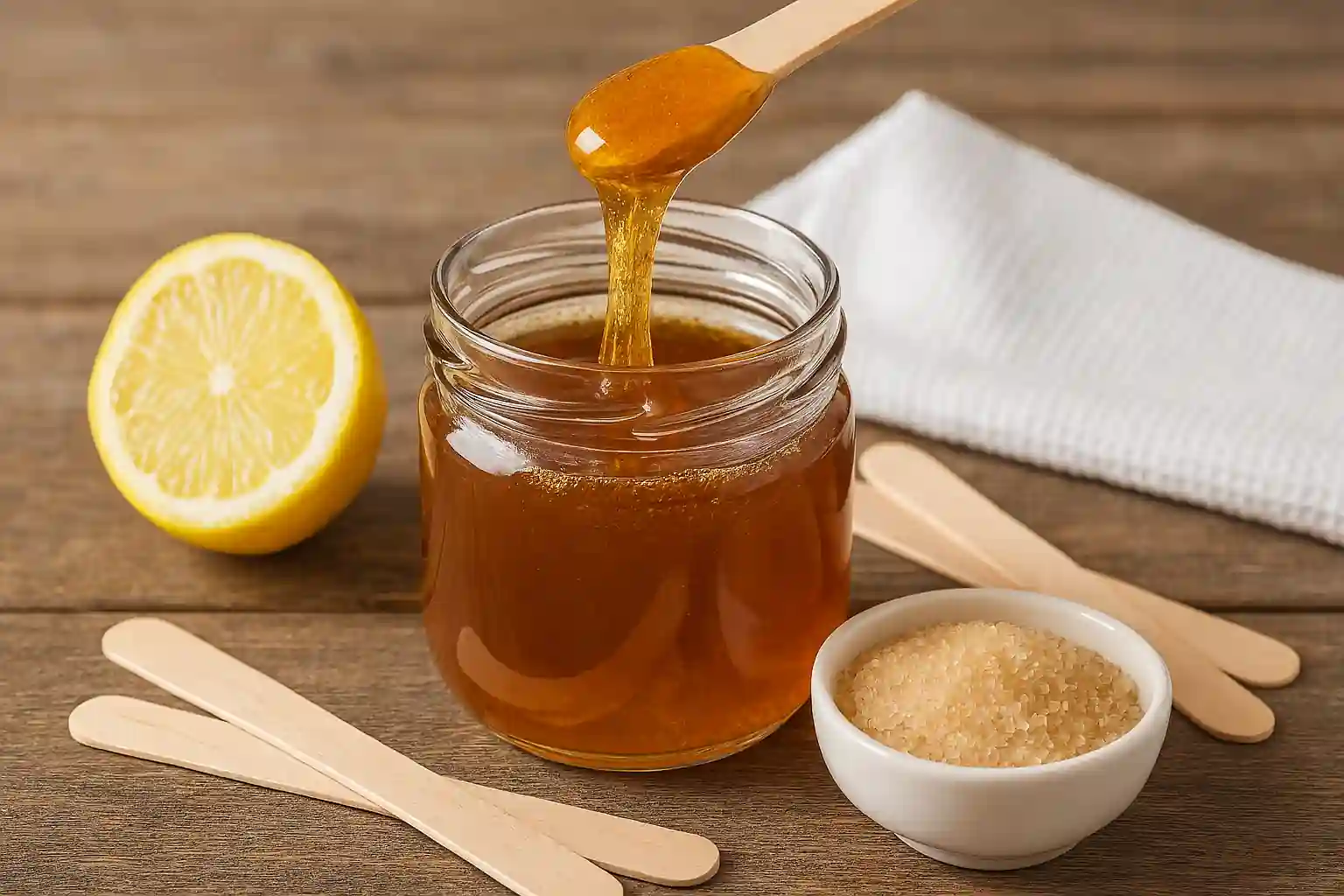
Sugar Wax Recipe: The Complete Informational Guide to Homemade Sugar Wax & Natural Hair Removal
Natural hair removal has been practiced for centuries, and sugar waxing remains one of the safest, most effective, and skin-friendly methods available today. This sugar wax recipe guide is designed as a fully informational resource, explaining everything from how to make sugar wax at home to advanced professional sugaring tips at home.
Whether you’re curious about homemade sugar wax, searching for a DIY sugar wax recipe, or simply want a natural waxing recipe that actually works, this page will walk you through every detail step by step.
What Is a Sugar Wax Recipe?
A sugar wax recipe is a natural formula used to create sugaring wax, also known as sugar paste, for body sugaring and natural hair removal. Unlike traditional hair removal wax, sugar wax is water-soluble, gentle on the skin, and made from simple kitchen ingredients.
People often choose sugar wax at home because it is:
-
Chemical-free waxing
-
Hypoallergenic hair removal
-
Eco-friendly waxing
-
Cost-effective waxing
-
Less painful waxing
-
Suitable for sensitive skin waxing
Sugaring has been used for centuries and continues to be a trusted natural waxing recipe today.
What Is Sugar Wax Made Of?
One of the most common questions is what is sugar wax made of. A basic sugar paste recipe uses only a few ingredients.
Core Sugar Wax Ingredients
The most common sugar wax ingredients include:
-
White sugar
-
Brown sugar
-
Lemon juice
-
Water
-
Apple cider vinegar
-
Honey
-
Citric acid
-
Essential oils (optional for fragrance)
These ingredients create a water-soluble wax that rinses off easily with warm water.
Types of Sugar Wax Recipes
There isn’t just one way to make sugar wax. Below are the most popular variations of a sugar waxing recipe.
Classic Sugar Lemon Wax
Sugar lemon wax is the traditional formula using sugar, lemon juice, and water. Lemon juice provides acidity, helping achieve the correct soft ball stage and caramel texture.
Sugar Wax Without Lemon Juice
If you have citrus sensitivity, you can make sugar wax without lemon or sugar wax without lemon juice by replacing lemon with vinegar or citric acid.
Sugar Wax With Vinegar
Sugar wax with vinegar commonly uses apple cider vinegar, making it ideal for sugar wax for sensitive skin.
Sugar Wax With Citric Acid
Sugar wax with citric acid is popular for consistency control and longer shelf life.
Sugar Wax With Honey
Sugar wax with honey adds moisturizing benefits and improves stretchy sugar wax properties.
How to Make Sugar Wax (Step by Step)
This section explains how to make sugar wax using both stovetop and microwave methods.
Stovetop Sugar Wax Recipe
Stovetop sugar wax recipe is the most traditional method.
Tools Needed
-
Saucepan
-
Wooden spatula or silicone spatula
-
Candy thermometer
-
Glass jar
Ingredients
-
White sugar or brown sugar
-
Lemon juice or vinegar
-
Water
Steps
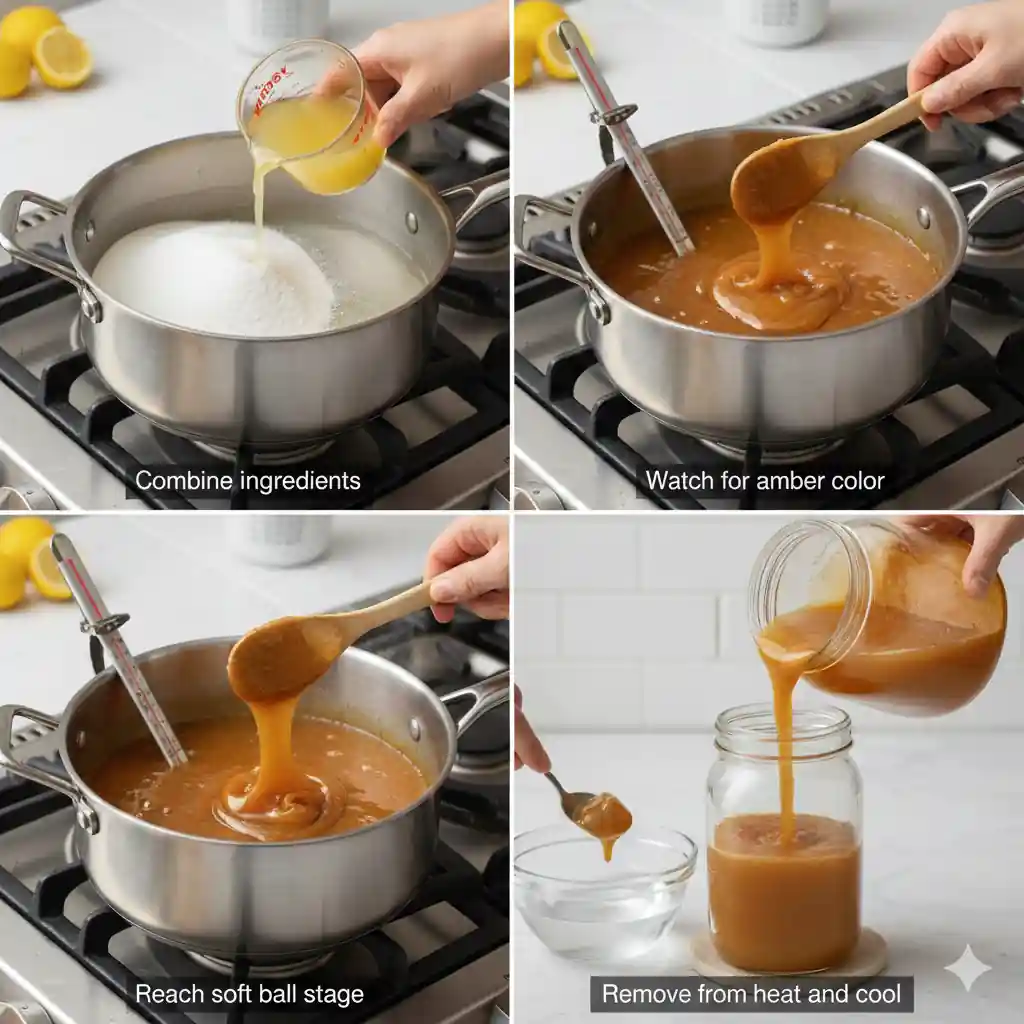
-
Combine sugar, liquid, and water in a saucepan
-
Heat on medium heat, stirring constantly
-
Watch for amber color and caramel texture
-
Reach soft ball stage (around 240°F)
-
Remove from heat and cool
This creates a sugar wax recipe that works consistently.
Microwave Sugar Wax Recipe
A microwave sugar wax recipe is faster and beginner-friendly.
Tools Needed
-
Microwave-safe bowl
-
Wooden spatula
-
Glass jar
Steps
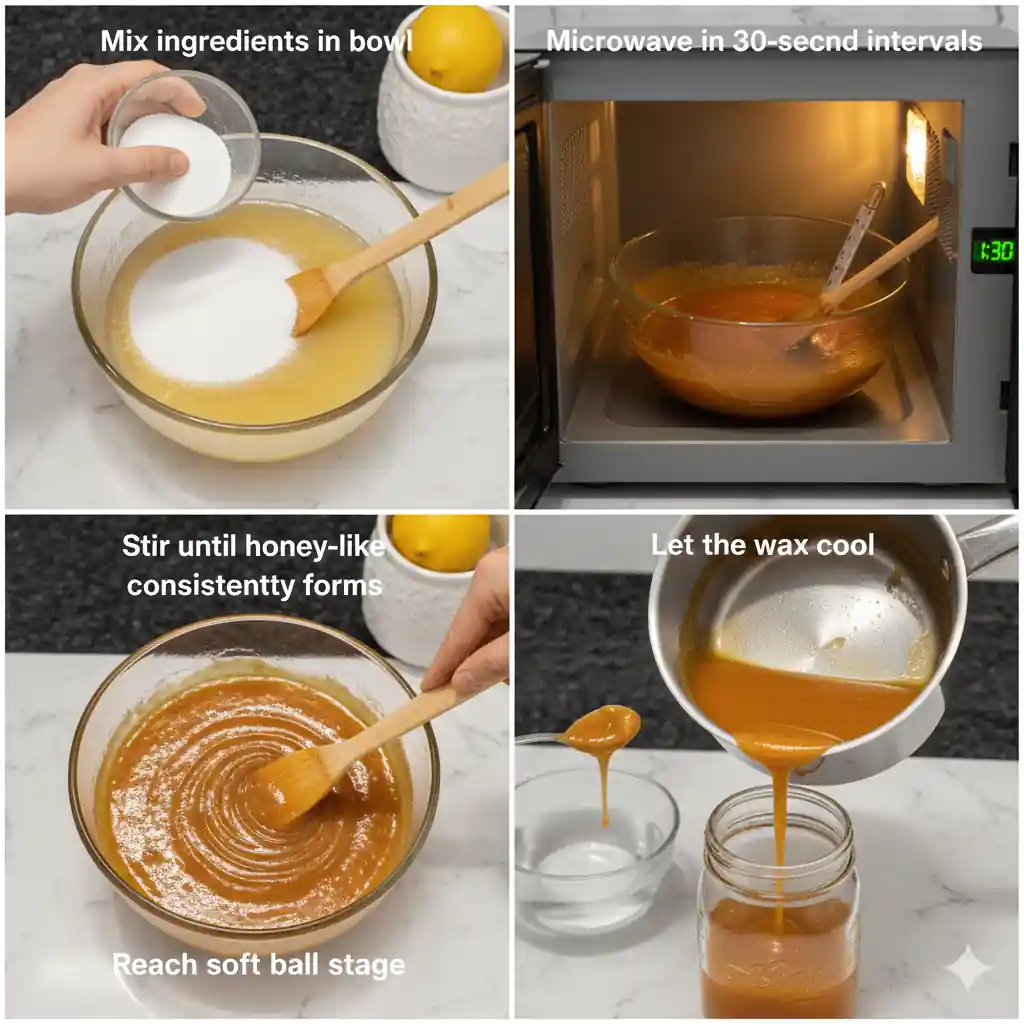
-
Mix ingredients in bowl
-
Microwave in 30-second intervals
-
Stir until honey-like consistency forms
-
Let the wax cool
No-Cook Sugar Wax
No-cook sugar wax uses pre-heated syrups but is less common and harder to control for beginners.
Sugar Wax Consistency Explained
Understanding sugar wax consistency is key to successful waxing.
Soft Sugar Wax vs Hard Sugar Wax
-
Soft sugar wax: Used with waxing strips or cotton cloth strips
-
Hard sugar wax: Molded by hand and flicked off without strips
Ideal Texture Indicators
-
Honey-like consistency
-
Caramel texture
-
Amber color
-
Slightly sticky sugar wax
-
Smooth and stretchy sugar wax
How to Use Sugar Wax Correctly
Learning how to use sugar wax properly ensures minimal irritation and effective hair removal.
Prepare Skin for Sugar Waxing
-
Prepare skin
-
Ensure clean and dry skin
-
Apply cornstarch or baby powder
-
Perform a skin patch test
Sugar Wax Application Technique
Step-by-Step Sugar Waxing Steps
-
Heat sugar wax
-
Test temperature for safe waxing temperature
-
Apply against hair growth
-
Remove with hair growth
-
Rinse residue with warm water
-
Moisturize after waxing
This method reduces breakage and supports natural exfoliation.
Sugar Wax for Beginners
A sugar wax for beginners approach focuses on simplicity.
Easiest Sugar Wax Recipe for Beginners
-
White sugar
-
Water
-
Vinegar
This is the easiest sugar wax recipe for beginners and minimizes errors.
Using Sugar Wax on Different Body Areas
Sugar Wax for Face
Is sugar wax safe for face? Yes, when done gently and at proper temperature.
Sugar Wax for Underarms
Ideal due to less painful waxing and minimal skin irritation.
Sugar Wax for Bikini Area
Effective for short hair and reduces ingrowns.
Sugar Wax for Sensitive Skin
Choose sugar wax without lemon juice or with honey.
Common Sugar Wax Problems & Fixes
Sugar Wax Too Hard
Why sugar wax becomes hard:
-
Overcooking
-
Low moisture
Reheating sugar wax with water helps.
Sugar Wax Too Runny
How to fix runny sugar wax:
-
Cook longer
-
Increase sugar ratio
Sugar Wax Crystallized
Occurs due to stirring after boiling.
Sugar Wax Burned
Caused by high heat. Discard immediately.
Sugar Wax Not Sticking
-
Skin too oily
-
Missing cornstarch
Sugar Wax Breaking Hair
Wax too cool or incorrect application angle.
Sugar Wax Pulling Skin
Wax applied too hot or wrong direction.
Sugar Wax Stuck on Skin
Rinse with warm water (water-soluble wax benefit).
Frequently Asked Questions About Sugar Wax
How Long Does Homemade Sugar Wax Last?
Stored properly in a glass jar, it can last several weeks.
Can Sugar Wax Be Reused?
Yes, sugar wax reusable when kept clean.
How Hot Should Sugar Wax Be?
Warm, not hot—safe enough to touch comfortably.
Can Sugar Wax Remove Short Hair?
Yes, even hair as short as 1/8 inch.
How Often Should You Sugar Wax?
Every 3–4 weeks depending on growth cycle.
Why Didn’t My Sugar Wax Work?
Common reasons include incorrect temperature or consistency.
Sugar Wax vs Other Hair Removal Methods
Sugar Wax vs Hard Wax
Sugar wax is water-soluble and gentler.
Sugar Wax vs Soft Wax
Less residue and easier cleanup.
Sugar Waxing vs Shaving
Longer-lasting results and smoother regrowth.
Sugar Waxing vs Laser Hair Removal
Non-permanent but affordable and natural.
Sugar Waxing vs Epilator
Less painful and less skin trauma.
Homemade Sugar Wax vs Store-Bought Wax
More affordable and chemical-free waxing.
Sugar Wax Aftercare & Storage
Sugar Waxing Aftercare
-
Avoid heat for 24 hours
-
Moisturize skin
-
Prevent ingrown hairs
Sugar Wax Storage
Store cooled sugar wax in airtight container.
Sugar Waxing Mistakes to Avoid
-
Skipping skin patch test
-
Overheating wax
-
Applying in wrong direction
-
Ignoring burn prevention
Dermatologist Tips & Safety Advice
Dermatologist tips emphasize:
-
Safe waxing temperature
-
Avoid broken skin
-
Suitable for hypoallergenic hair removal
Professional Sugaring Tips at Home
-
Use gloves for control
-
Practice flicking motion
-
Maintain correct wax texture
Final Thoughts on Sugar Wax Recipe
A well-prepared step by step sugar wax recipe offers a safe, natural, and effective solution for hair removal. With proper technique, sugar waxing provides smoother skin, minimal skin irritation, and long-lasting results.
If you enjoy homemade techniques and comforting food inspiration as well, you may also enjoy browsing this cozy and relevant resource:
👉 10 Best Crockpot Chicken Soup Recipes – a great example of simple, nourishing homemade ideas: https://menumoments.com/10-best-crockpot-chicken-soup-recipes/
By mastering this DIY sugar wax recipe, you gain full control over ingredients, technique, and skin health—making sugar wax at home one of the best choices for natural hair removal.
Enjoyed this recipe?
One great recipe. Every Sunday. In your inbox.
Weekly. No spam. Unsubscribe in one click.
Keep reading
More from Recipes
 →
→Hanky Panky Recipe (Cocktail & Appetizer Guide)
If you’ve ever searched for a hanky panky recipe, you may have noticed something interesting: the name refers to two completely different but equally iconic creations. One is a legendary pre-prohibition cocktail made with gin, sweet vermouth, and Fernet-Branca. The other is a beloved Midwest recipe a savory, cheesy, meaty spread baked on rye bread … Read more
· 7 min read
 →
→Fried Chicken Fries Recipe
Fried chicken fries are the perfect crossover snack crispy on the outside and juicy on the inside, shaped like fries but made from seasoned chicken. This fried chicken fries recipe walks you through everything: what chicken fries are, how to make golden, crunchy chicken fries, and how to recreate fast food–style chicken fries at home … Read more
· 5 min read
Juicing Recipes: The Complete Informational Guide to Fresh, Healthy, Homemade Juice
Juicing recipes have become one of the most popular ways to consume fresh produce in a simple, drinkable form. From fresh juice packed with natural vitamins and minerals to carefully planned juice cleanse routines, juicing offers a convenient gateway into plant-based nutrition and liquid nutrition. This guide is designed to walk you through everything you … Read more
· 5 min read