Cast Iron Skillet Chicken: The Ultimate Informational Guide to Crispy, Juicy, Flavor-Packed Chicken
Cooking cast iron skillet chicken is one of those timeless kitchen skills that never goes out of style. Whether you’re new to cooking chicken or already comfortable experimenting with flavors, learning how to cook chicken in a cast iron skillet opens the door to better texture, deeper flavor, and more reliable results. This page is … Read more
By Menu Moments
Menu Moments editorial
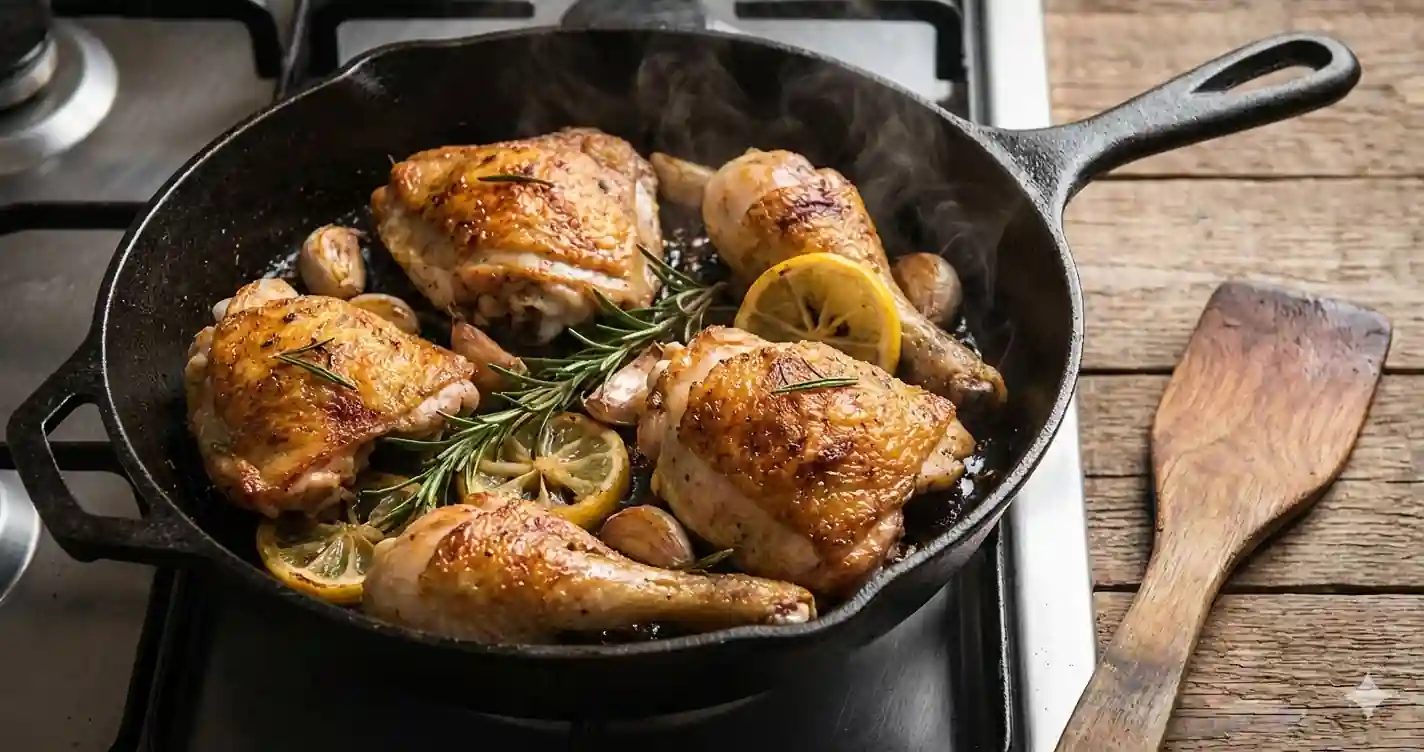
Cooking cast iron skillet chicken is one of those timeless kitchen skills that never goes out of style. Whether you’re new to cooking chicken or already comfortable experimenting with flavors, learning how to cook chicken in a cast iron skillet opens the door to better texture, deeper flavor, and more reliable results.
This page is a complete informational guide explaining why cast iron works so well, how to use it properly, and what techniques give you crispy skin, juicy chicken, and incredible flavor development without over complicating the process.
Why Cast Iron Skillet Chicken Is So Popular
Is Cast Iron Good for Chicken?
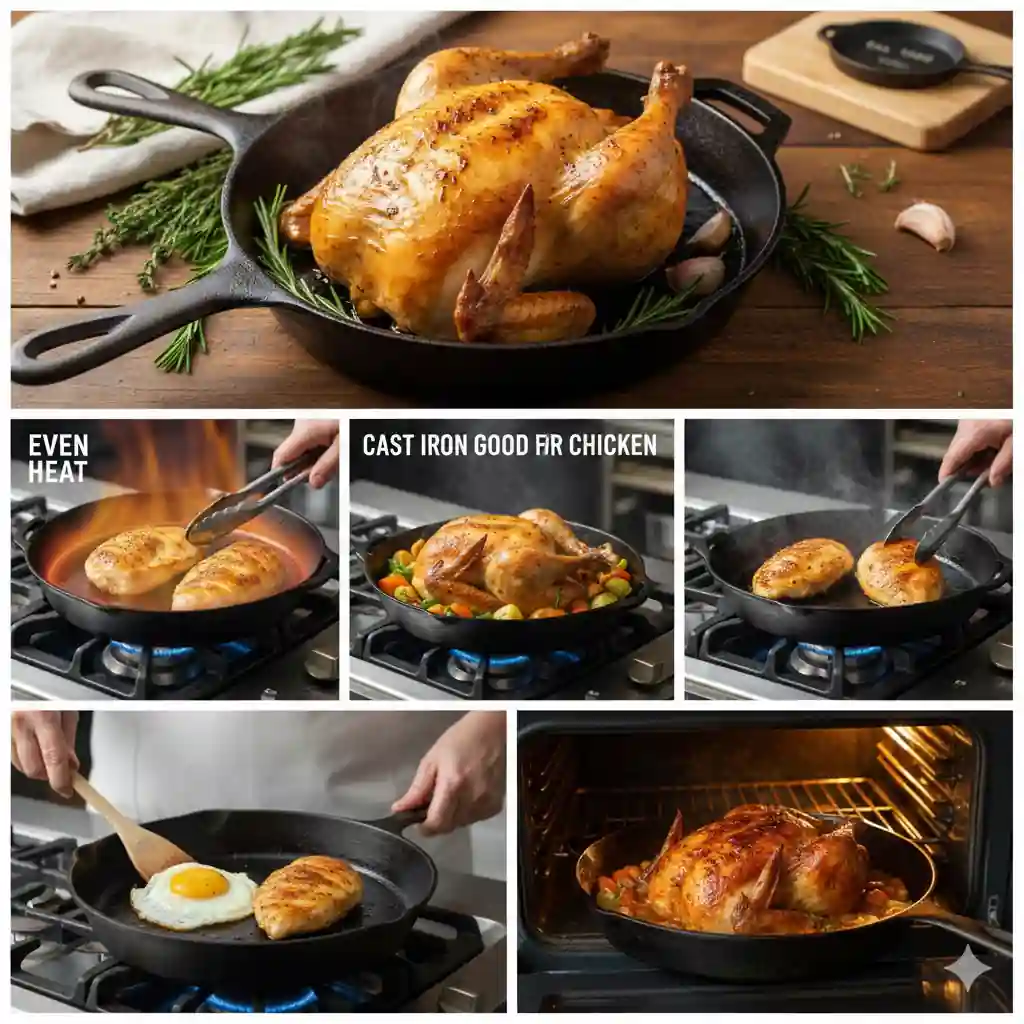
Yes, cast iron is good for chicken, and there are several reasons why cooks around the world rely on it:
-
Even heat distribution prevents hot spots
-
Excellent for high-heat cooking
-
Creates a naturally non-stick surface when properly maintained
-
Perfect for searing, pan-roasted chicken, and oven finishing
-
Durable, oven-safe cookware that lasts generations
A well-maintained seasoned cast iron skillet or a Lodge cast iron skillet allows you to cook everything from chicken thighs to chicken breasts without tearing the meat or burning the skin.
Understanding Chicken Cuts for Cast Iron Cooking
Different cuts of chicken (poultry) behave differently in a skillet. Understanding this helps you avoid dry meat and uneven cooking.
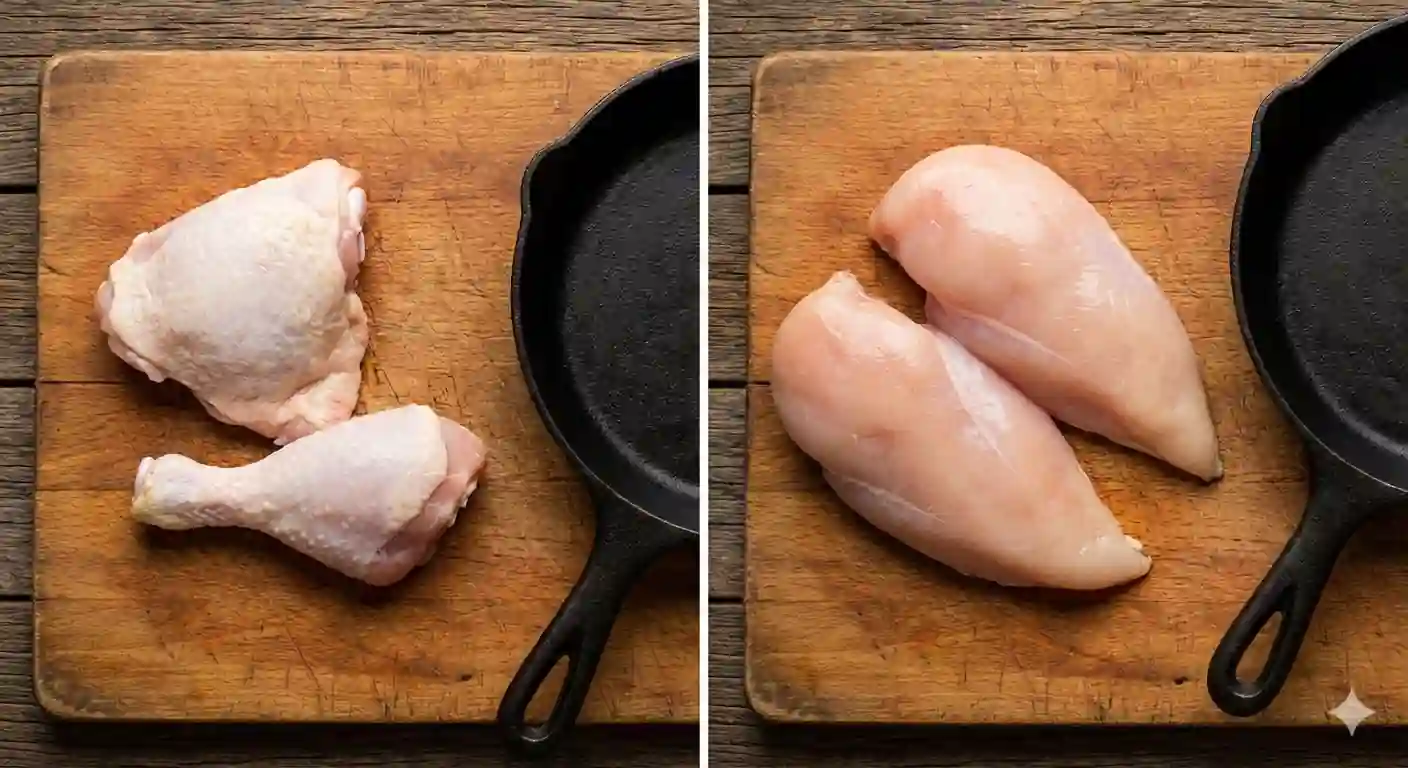
Bone-In Chicken vs Boneless Chicken
Bone-In Chicken
-
Retains moisture better
-
Takes longer to cook
-
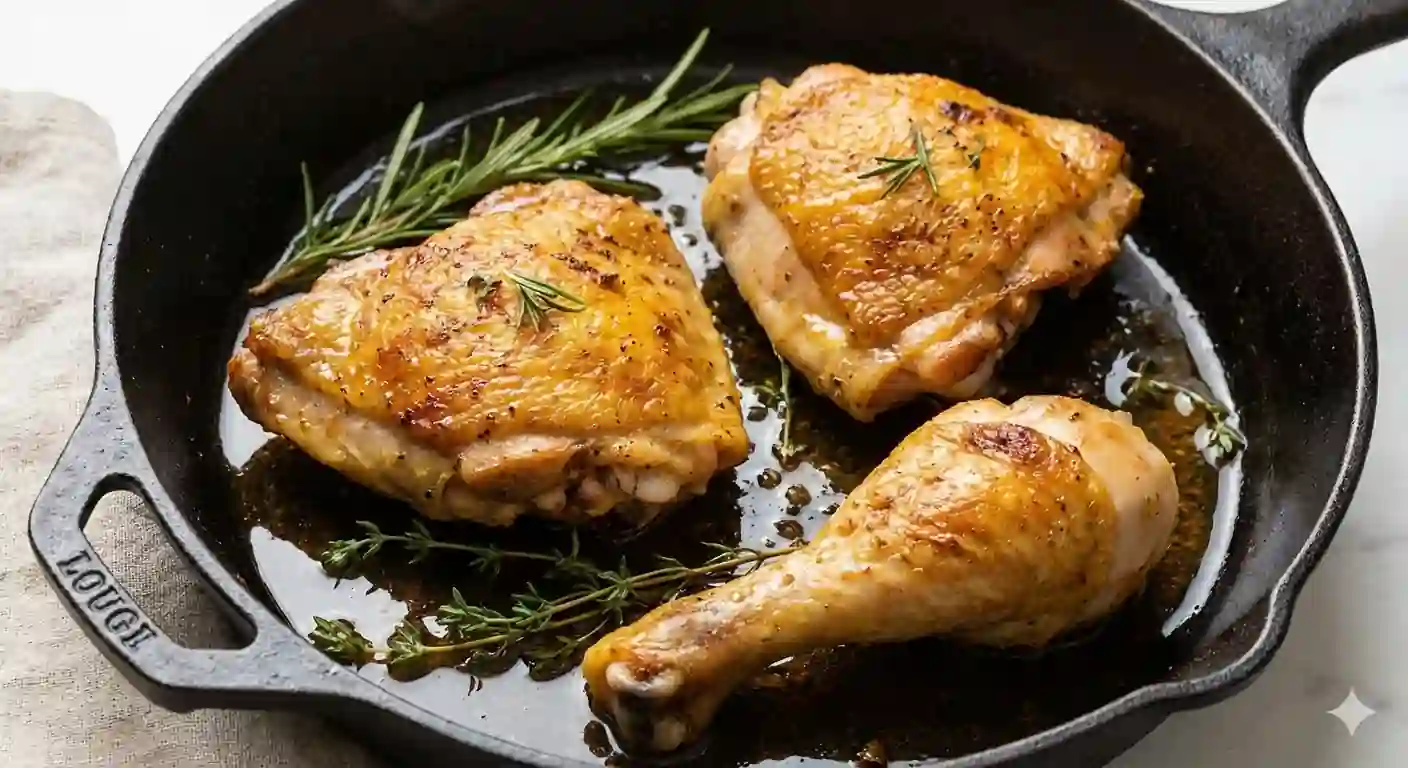
Ideal for cast iron skillet chicken thighs and chicken drumsticks
Boneless Chicken
-
Cooks faster
-
Easier to overcook
-
Common in cast iron skillet chicken breast recipes
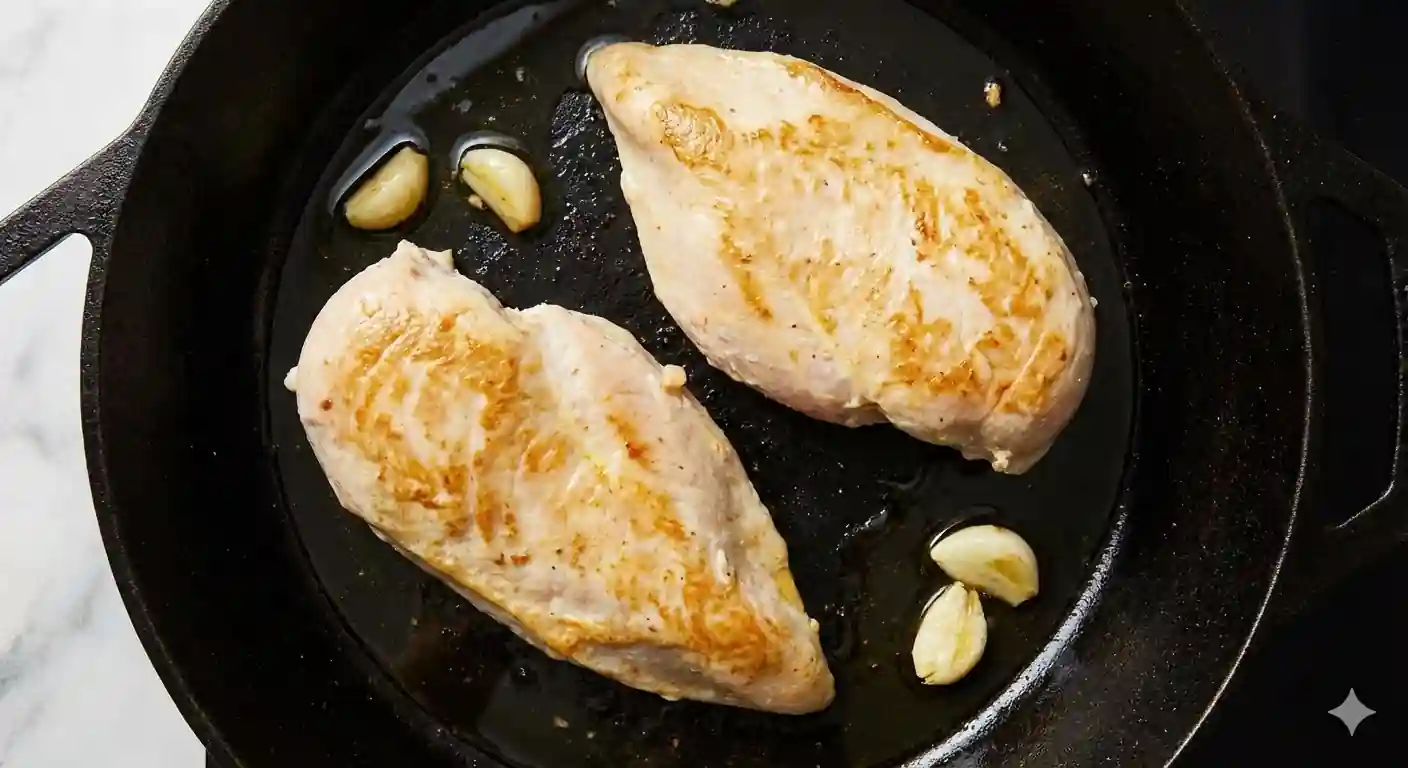
Boneless chicken breasts getting a quick, golden sear in a hot cast iron skillet.
Both options work well for chicken in cast iron skillet cooking when the right techniques are used.
Best Chicken Parts for a Cast Iron Pan
Chicken Thighs
-
High fat content
-
Excellent for crispy chicken in cast iron skillet
-
Skin renders beautifully
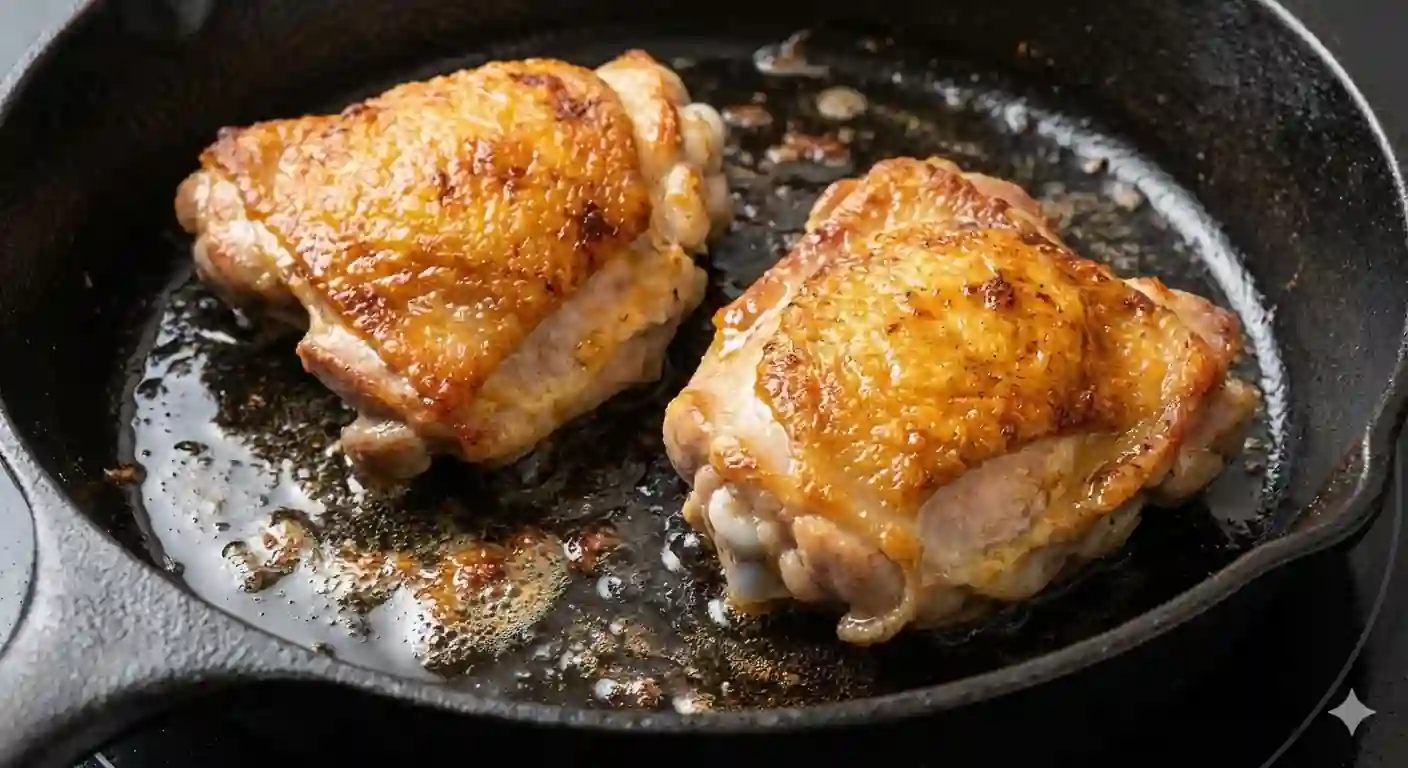
The high heat of a cast iron skillet is perfect for rendering the fat in chicken thighs, resulting in irresistibly crispy skin
Chicken Breasts
-
Leaner cut
-
Best cooked using temperature control
-
Popular for juicy cast iron chicken recipe
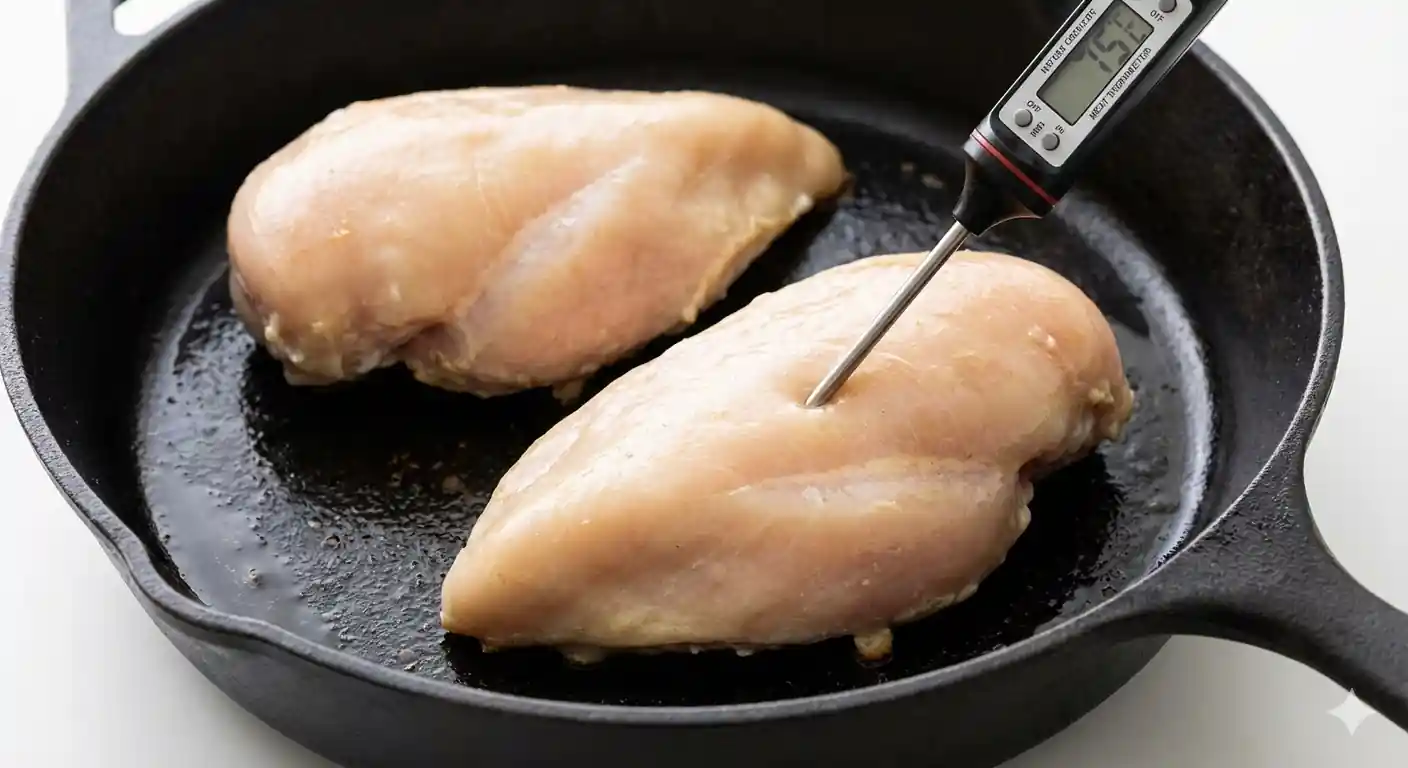
Using a meat thermometer is key to cooking lean chicken breasts to perfection in a cast iron skillet, ensuring they remain juicy.
Chicken Drumsticks
-
Bone-in and flavorful
-
Ideal for one pan cast iron chicken
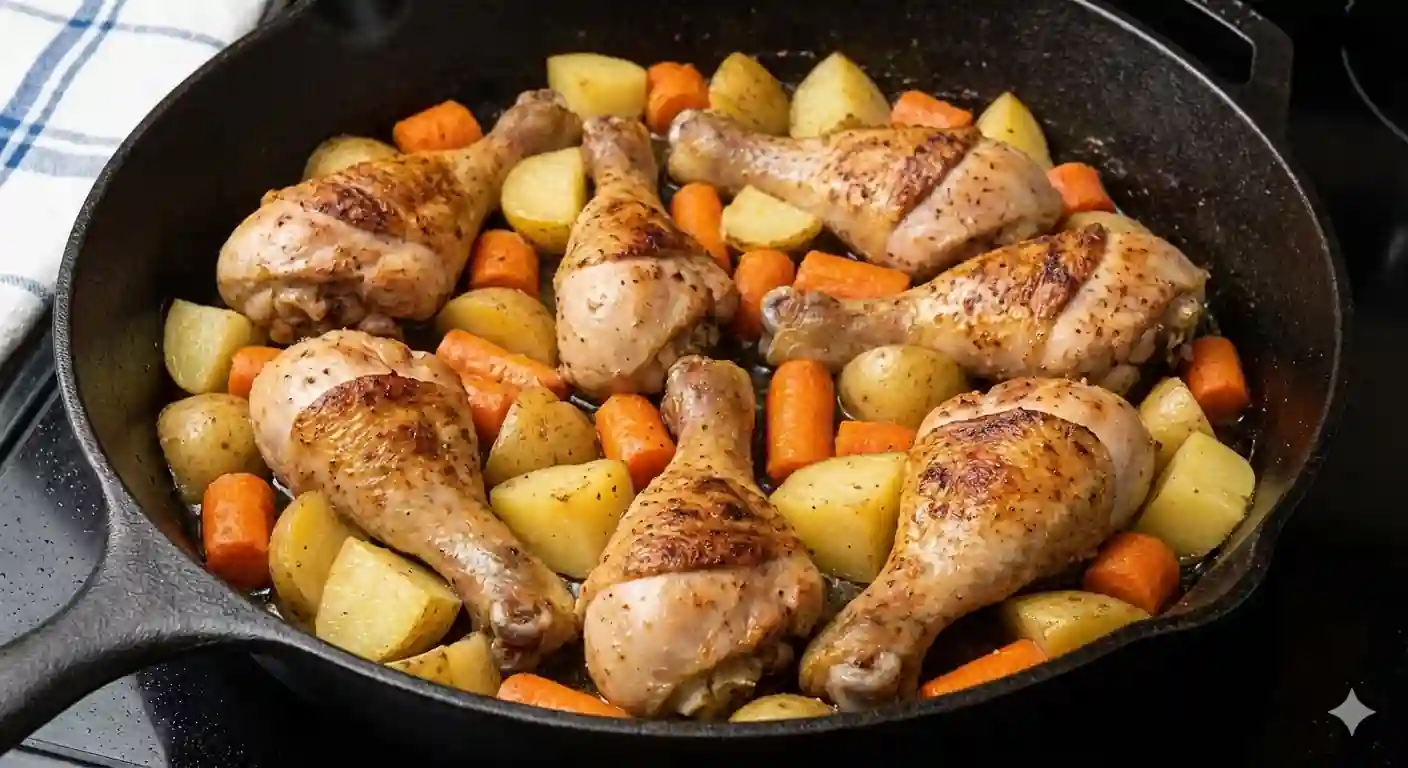
Bone-in chicken drumsticks are perfect for creating a flavorful one-pan meal with vegetables in your cast iron skillet.
Cast Iron Skillet Types Explained
Seasoned Cast Iron
-
Develops a slick cooking surface over time
-
Ideal for pan seared chicken cast iron
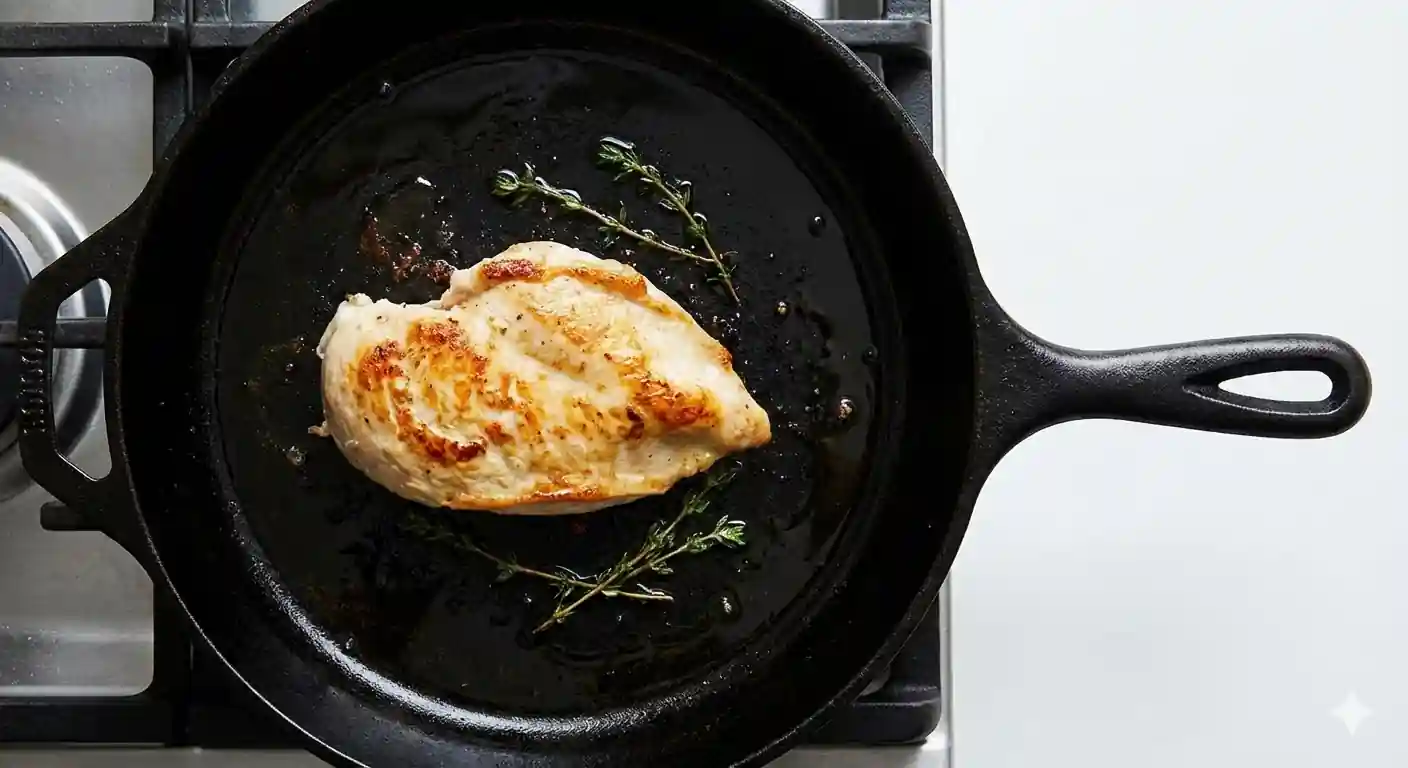
The slick, seasoned surface of this cast iron pan creates a perfect, golden-brown sear on the chicken breast.
Enameled Cast Iron
-
Easier cleanup
-
No seasoning maintenance
-
Slightly less effective for skin crisping
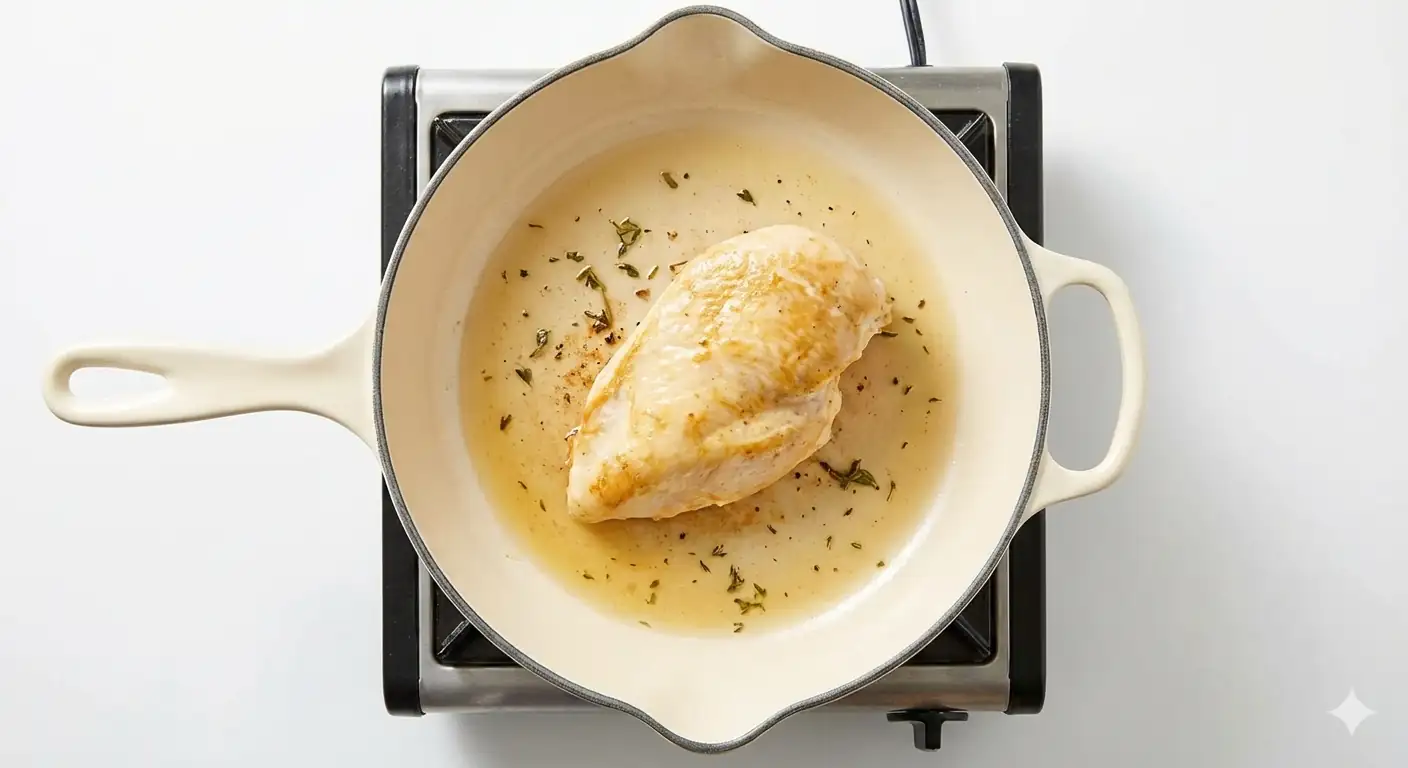
The smooth, non-porous surface of the enameled cast iron makes for easy cleanup, even when cooking with liquids.
Both options work for cast iron pan chicken, but seasoned pans excel at browning.
How Heat Works in Cast Iron Cooking
What Temperature for Cast Iron Chicken?
-
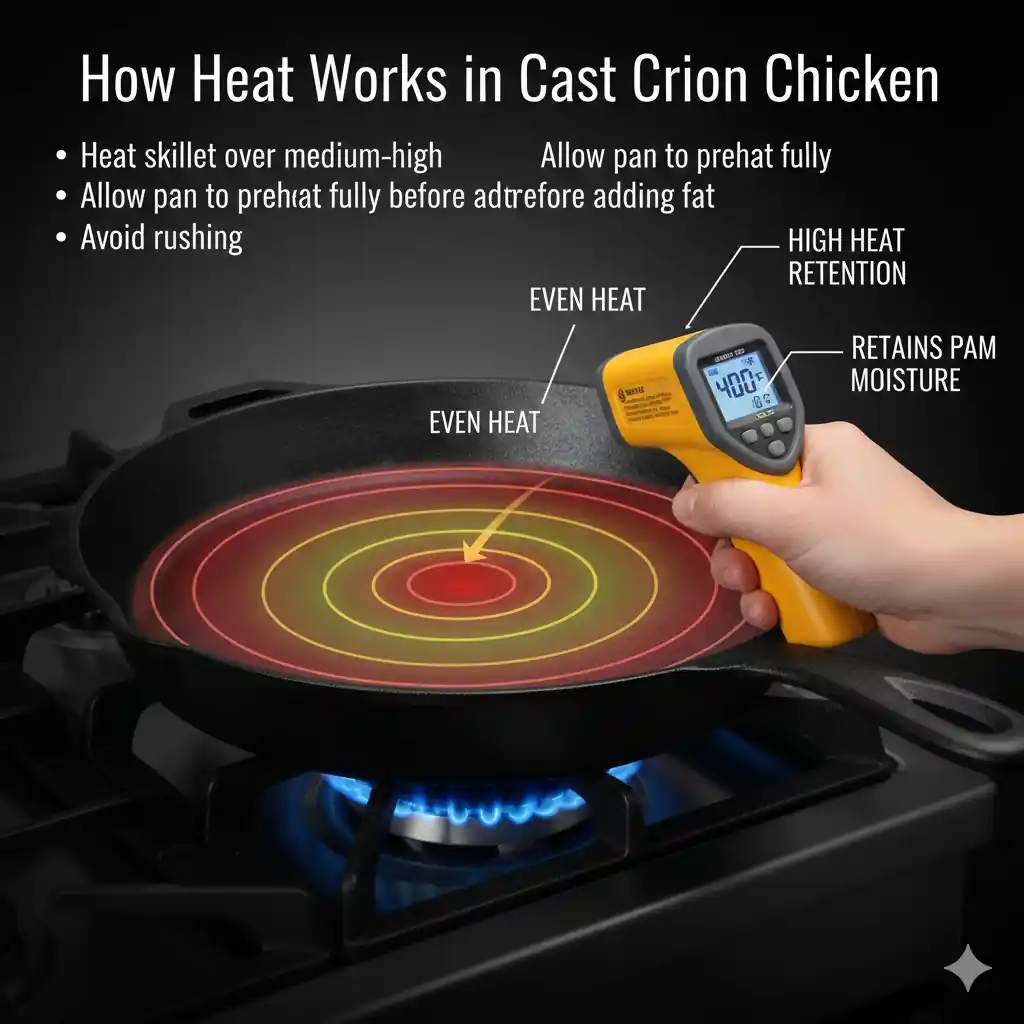
Heat skillet over medium-high
-
Allow pan to preheat fully before adding fat
-
Avoid rushing cast iron heats slowly but retains heat extremely well
This steady heat allows for:
-
Proper Maillard reaction
-
Better golden brown crust
-
Improved lock in moisture
Step-by-Step: How to Cook Chicken in Cast Iron Skillet
Preparation Is Everything
Step 1: Pat Chicken Dry
Moisture prevents browning. Always pat chicken dry with paper towels.
Step 2: Season Generously
Use:
-
Kosher salt
-
Black pepper
-
Paprika
-
Fresh or dried thyme, rosemary, or oregano
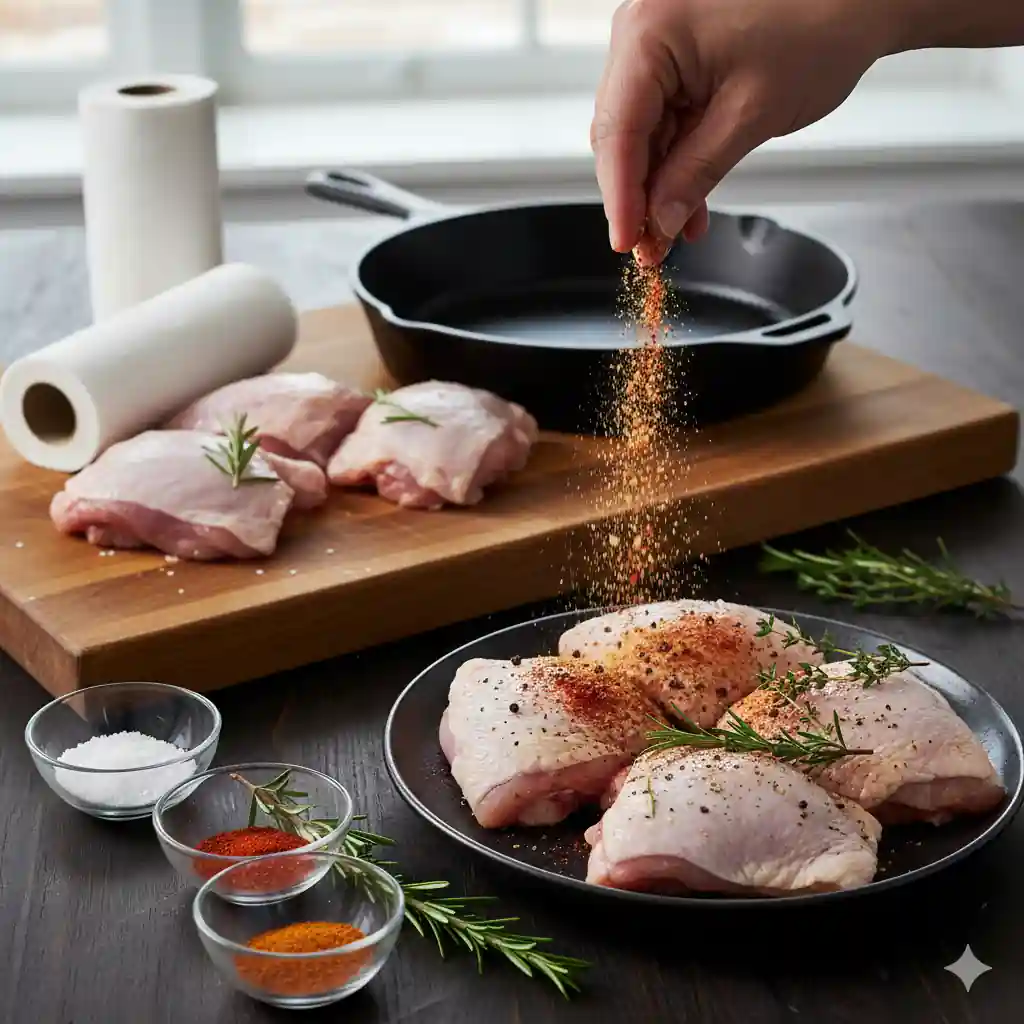
Mastering the cast iron skillet is the secret to perfectly juicy, crispy chicken.
This step sets the foundation for flavor.
Fat Choices for Cast Iron Chicken
Use a combination of:
-
Olive oil (high smoke point)
-
Butter (flavor)
-
Rendered chicken fat (from skin-on cuts)
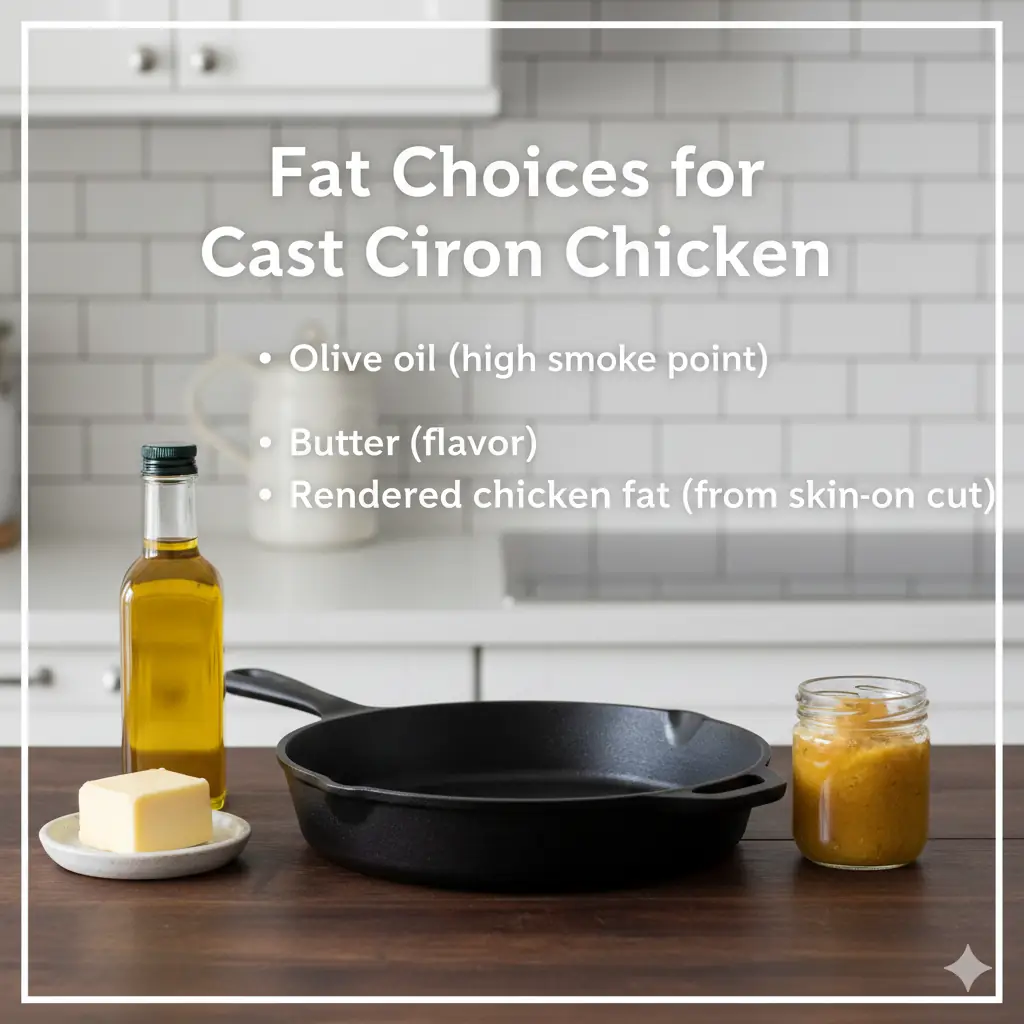
Combining the right fats ensures a high smoke point and unbeatable flavor.
Searing for Crispy Skin
Skin Side Down Matters
Place chicken skin side down and leave it alone. Moving it too early ruins crisping.
Key Tips:
-
Do not overcrowd the pan
-
Allow skin to render naturally
-
Let the skillet do the work
This process creates crispy skin and a rich base of pan drippings.
Stovetop vs Oven Cooking
Stovetop Cast Iron Chicken
Best for:
-
Thin cuts
-
Boneless chicken
-
Fast cooking
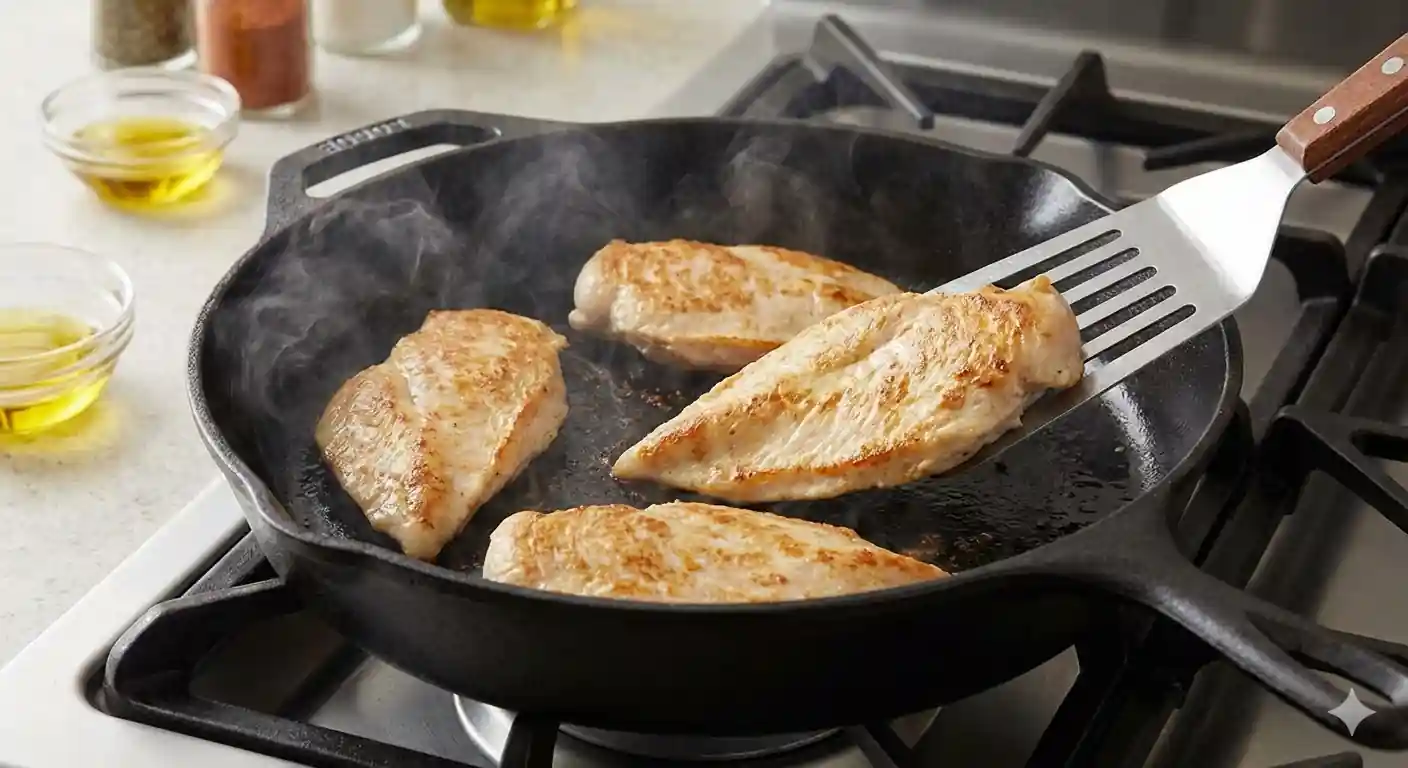
Thin, boneless chicken breasts cook quickly and develop a great sear in a cast iron skillet on the stovetop.
Oven Baked Cast Iron Chicken
Best for:
-
Thick cuts
-
Bone-in chicken
-
Even internal cooking
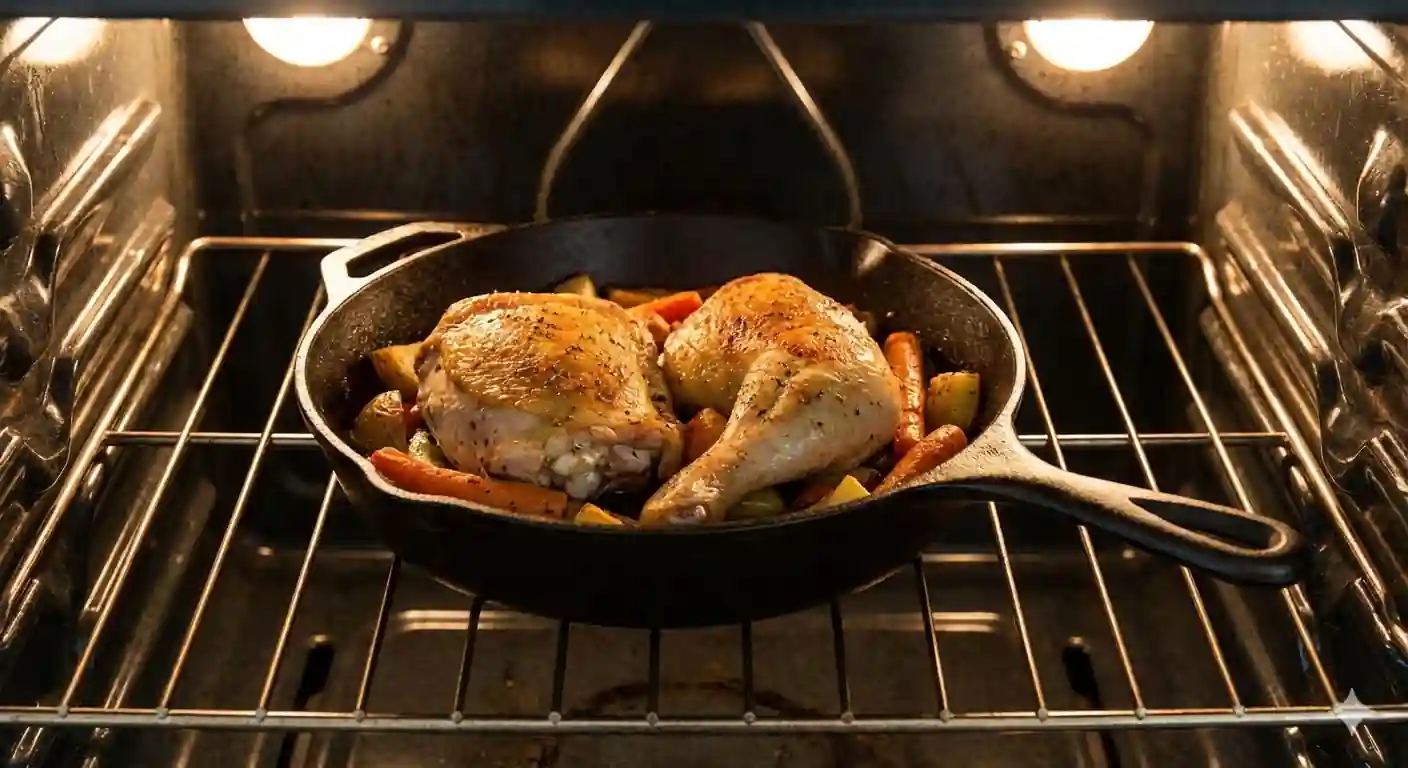
For thicker, bone-in chicken, finishing in the oven ensures an even cook all the way through, often after a quick sear on the stove.
Many recipes start on the stovetop and finish in the oven for best results.
Do You Bake Chicken in Cast Iron?
Yes, you absolutely bake chicken in cast iron. After searing, move the skillet into a preheated oven.
This technique:
-
Ensures even cooking
-
Prevents burning
-
Helps reach safe internal temperature (165°F / 74°C)
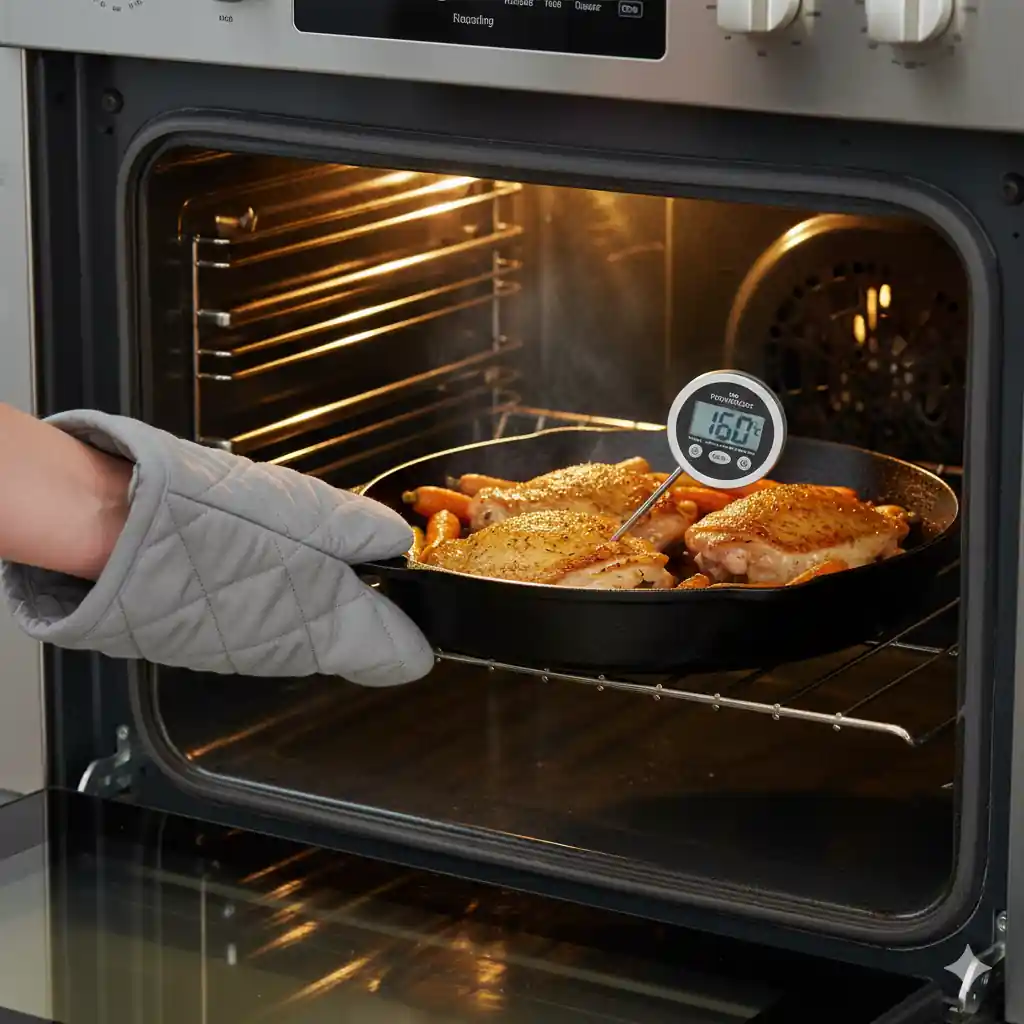
Perfectly roasting chicken in a cast-iron skillet requires checking the internal temperature to ensure juicy, safe results
Always verify using a meat thermometer.
How Long to Cook Chicken in Cast Iron
Cooking time depends on cut and thickness:
-
Chicken breasts: 12–18 minutes
-
Chicken thighs: 20–30 minutes
-
Drumsticks: 25–35 minutes
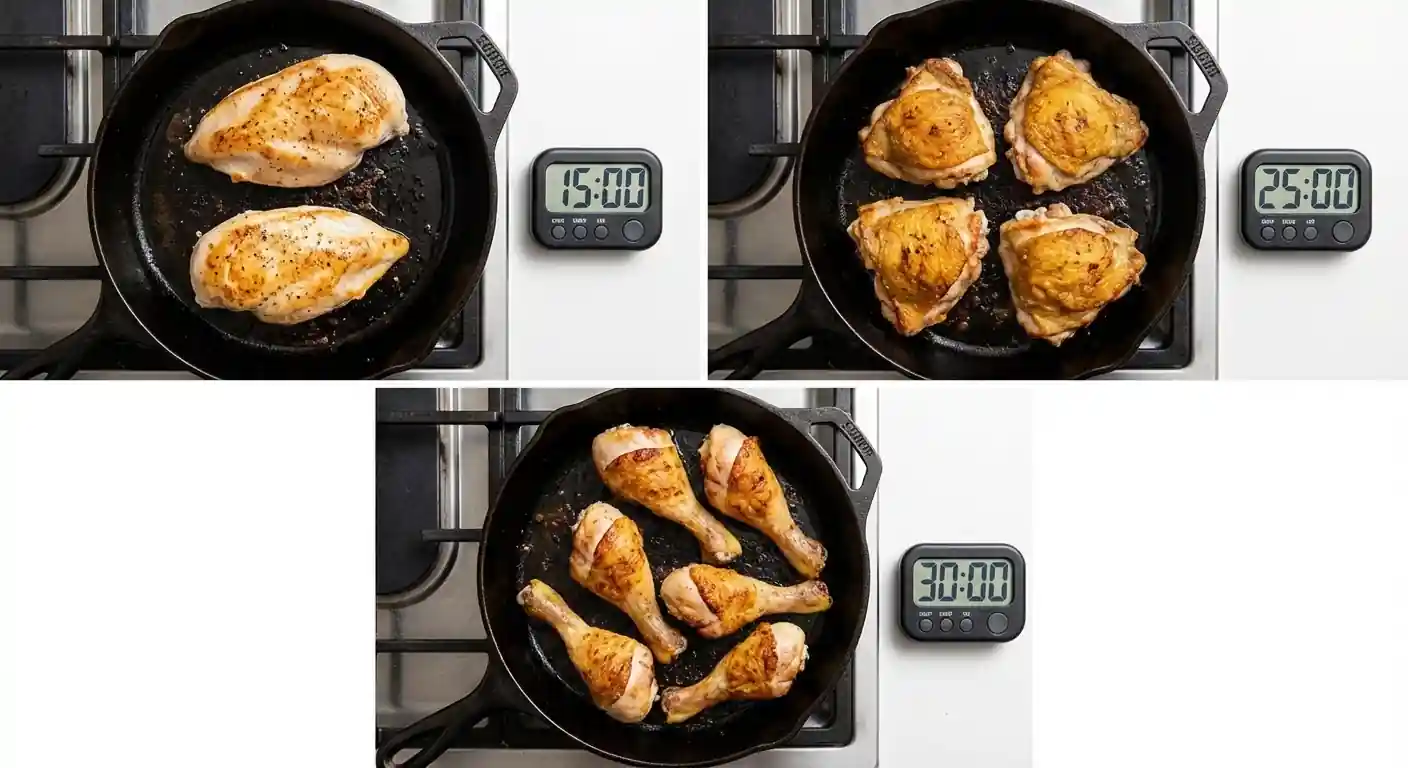
How long to cook chicken in a cast iron skillet? This collage shows the average cooking times for different cuts: breasts (15 min), thighs (25 min), and drumsticks (30 min).
The goal is juicy chicken, not rushing.
How to Get Crispy Chicken Skin in Cast Iron
Key Techniques That Work
-
Pat chicken dry
-
Use medium-high heat
-
Start skin side down
-
Avoid flipping too soon
-
Allow fat to render fully
Crisp skin equals proper heat management and patience.
Flavor Building: Garlic, Herbs, and Spices
Garlic Butter Cast Iron Chicken
Adding garlic and butter during the last minutes of cooking infuses flavor without burning.
Fresh Herbs
Use:
-
Thyme
-
Rosemary
-
Oregano
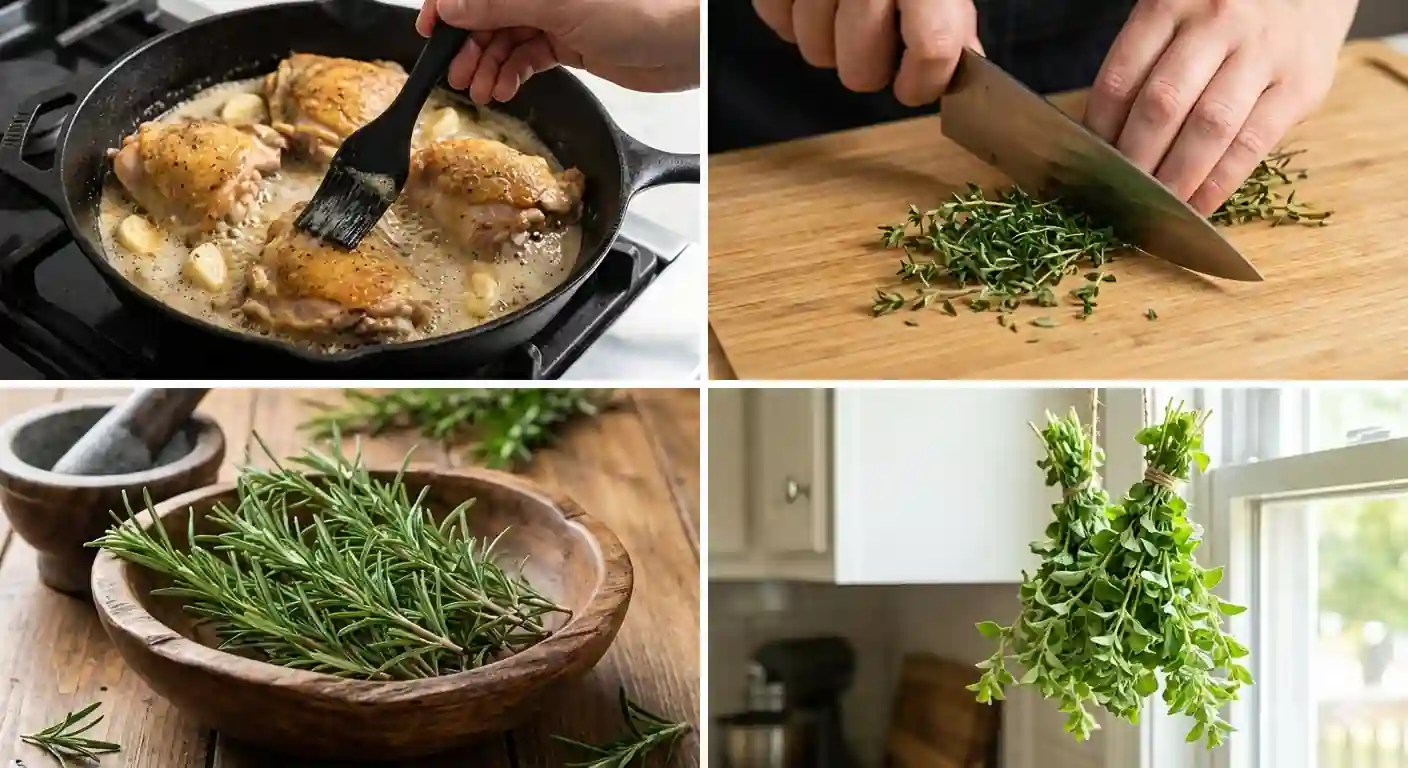
Building flavor with fresh ingredients: Basting chicken with garlic butter, chopping fresh thyme, selecting rosemary, and using oregano
Fresh herbs elevate aroma and taste.
Pan Sauces and Skillet Sauce Basics
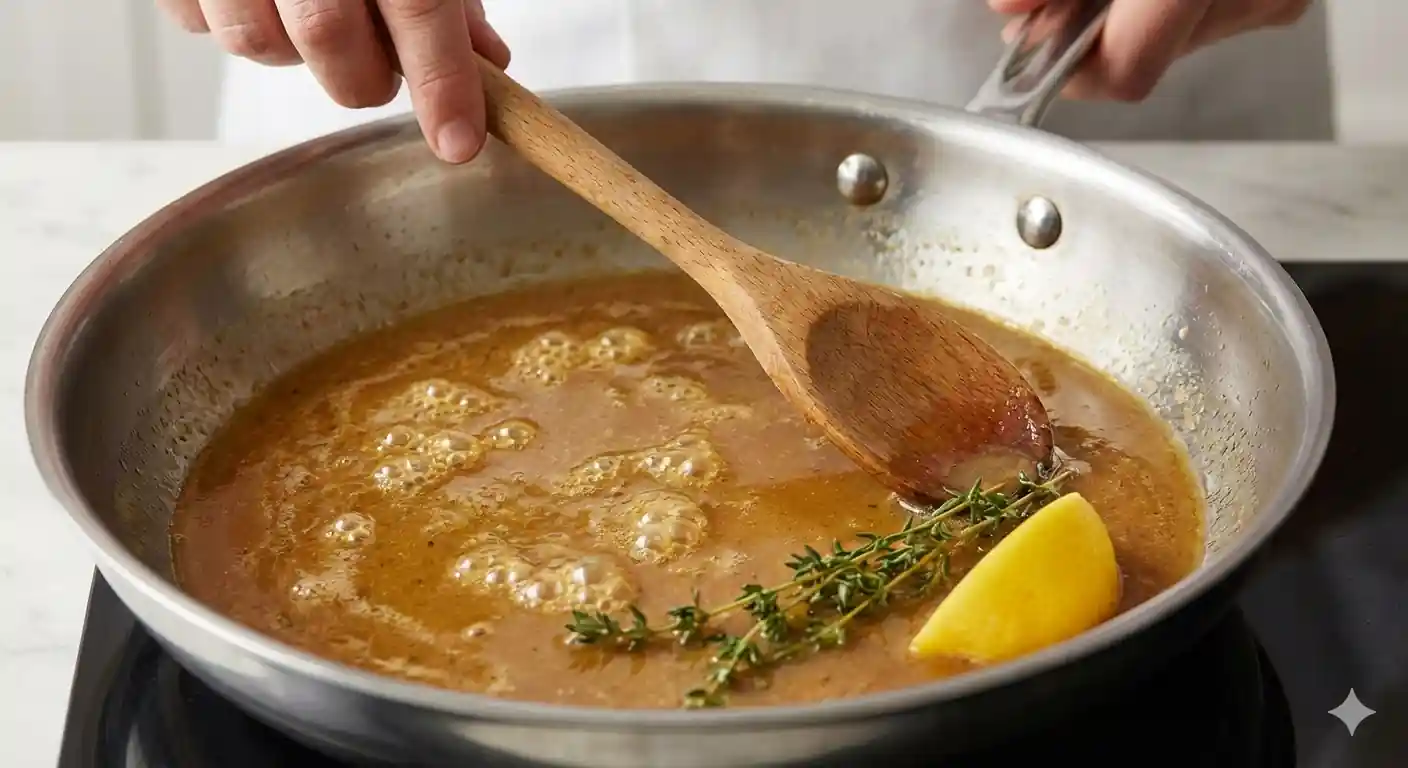
Using Pan Drippings
After removing the chicken, leave the flavorful bits behind.
Deglazing the Pan
Add liquid to loosen browned bits:
-
Chicken broth
-
White wine
-
Lemon juice
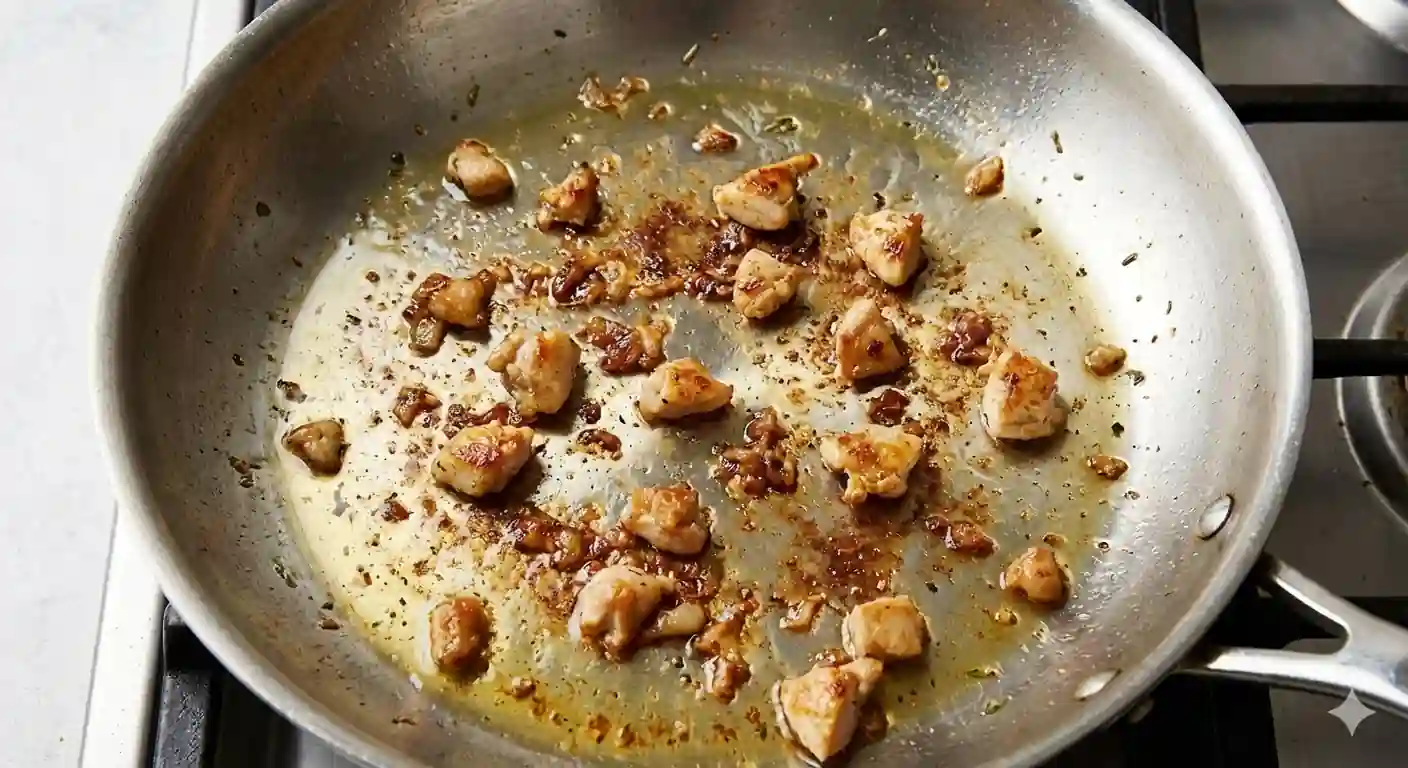
After cooking, the flavorful browned bits, known as fond, are left in the pan.
This forms the base of a skillet sauce.
Flavor Add-Ins for Sauces
Enhance sauces with:
-
Honey
-
Soy sauce
-
Dijon mustard
Balance sweetness, acidity, and saltiness for depth.
One Pan Cast Iron Chicken Meals
A one pan cast iron chicken approach saves time and enhances flavor. Vegetables absorb the sauce and drippings, making the meal cohesive.
Cast Iron Chicken Recipe Variations
Cast Iron Skillet Chicken Thighs
Rich, forgiving, and ideal for beginners.
Cast Iron Skillet Chicken Breast
Lean and fast perfect with careful temperature control.
Pan Seared Chicken Cast Iron
Great for weeknight meals.
Juicy Cast Iron Chicken Recipe
Focus on resting and proper internal temperature.
Why Let Chicken Rest Before Serving?
Always let rest before serving. Resting:
-
Redistributes juices
-
Prevents dryness
-
Improves texture
Five minutes makes a big difference.
Flavor Development and the Science Behind It
The Maillard Reaction Explained
This chemical reaction occurs when proteins and sugars brown under heat. It’s responsible for:
-
Rich aroma
-
Deep flavor
-
Golden brown crust
Cast iron excels at this.
Cleaning and Maintaining Your Cast Iron Skillet
Preserve the Naturally Non-Stick Surface
-
Avoid harsh soap
-
Dry immediately
-
Lightly oil after cleaning
Proper care improves performance over time.
Frequently Asked Questions
Is Cast Iron Good for Chicken?
Yes especially for crispy skin and moisture retention.
What Temperature for Cast Iron Chicken?
Medium high for searing, then oven finish if needed.
How Long to Cook Chicken in Cast Iron?
Until it reaches165°F / 74°C internally.
Cooking Confidence Comes from Understanding
Once you understand how to cook chicken in cast iron skillet, the process becomes intuitive. You learn to trust heat, listen to sizzling, and watch for visual cues rather than relying only on timers.
Cooking with cast iron is similar to mastering other traditional kitchen skills like learning how natural ingredients work together. If you enjoy hands on, homemade approaches, you may also like this guide to natural homemade sugar wax recipes, which explains another practical kitchen technique using simple ingredients:
Final Thoughts on Cast Iron Skillet Chicken
Cooking cast iron skillet chicken is about technique, patience, and understanding your tools. Whether you’re making crispy chicken in cast iron skillet, oven baked cast iron chicken, or stovetop cast iron chicken, the fundamentals remain the same:
-
Proper heat
-
Good seasoning
-
Quality ingredients
-
Respect for the process
Master these, and you’ll consistently produce chicken with crispy skin, juicy interiors, and unforgettable flavor.
From the collection
This piece appears in
Enjoyed this recipe?
One great recipe. Every Sunday. In your inbox.
Weekly. No spam. Unsubscribe in one click.
Keep reading
More from Recipes
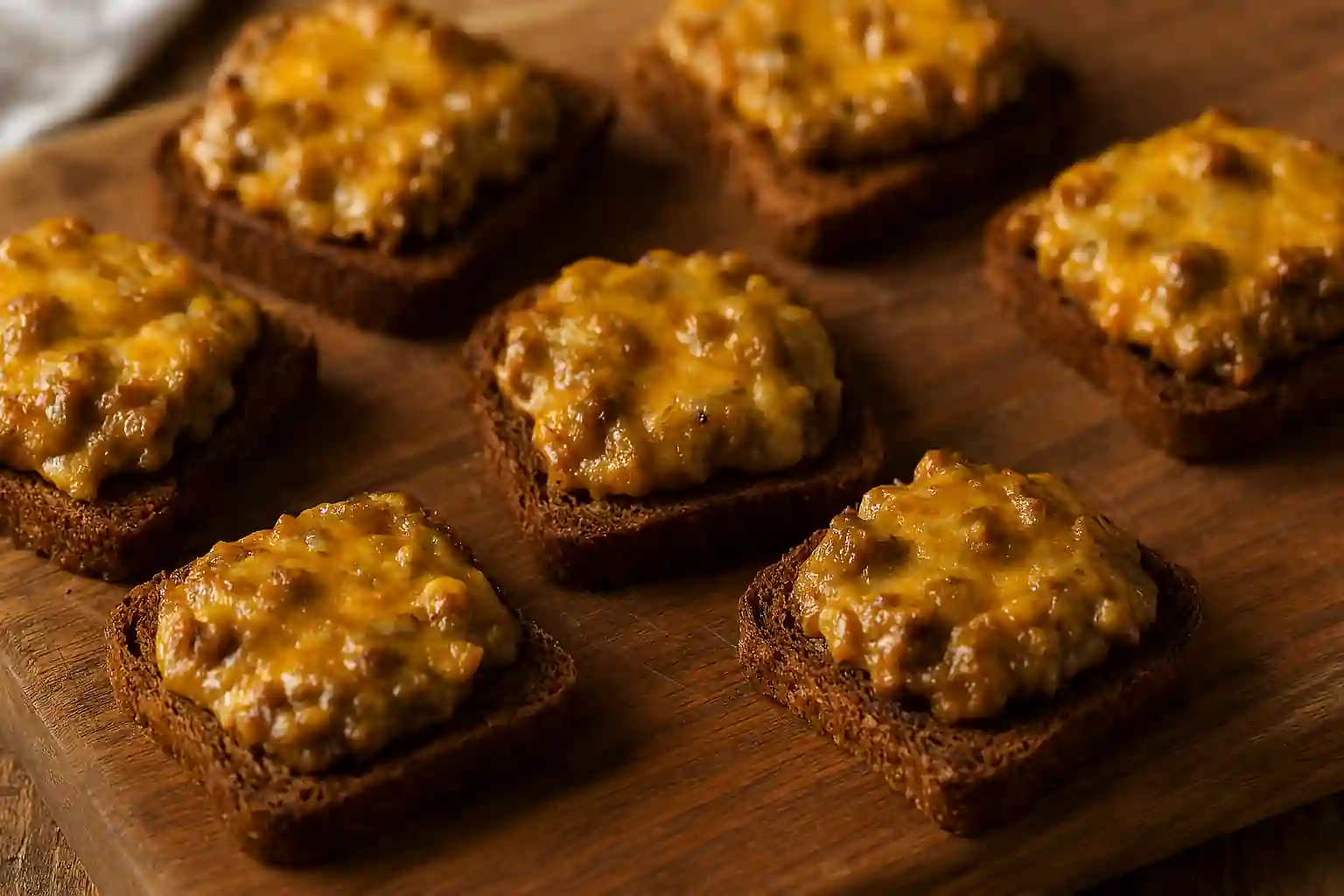 →
→Hanky Panky Recipe (Cocktail & Appetizer Guide)
If you’ve ever searched for a hanky panky recipe, you may have noticed something interesting: the name refers to two completely different but equally iconic creations. One is a legendary pre-prohibition cocktail made with gin, sweet vermouth, and Fernet-Branca. The other is a beloved Midwest recipe a savory, cheesy, meaty spread baked on rye bread … Read more
· 7 min read
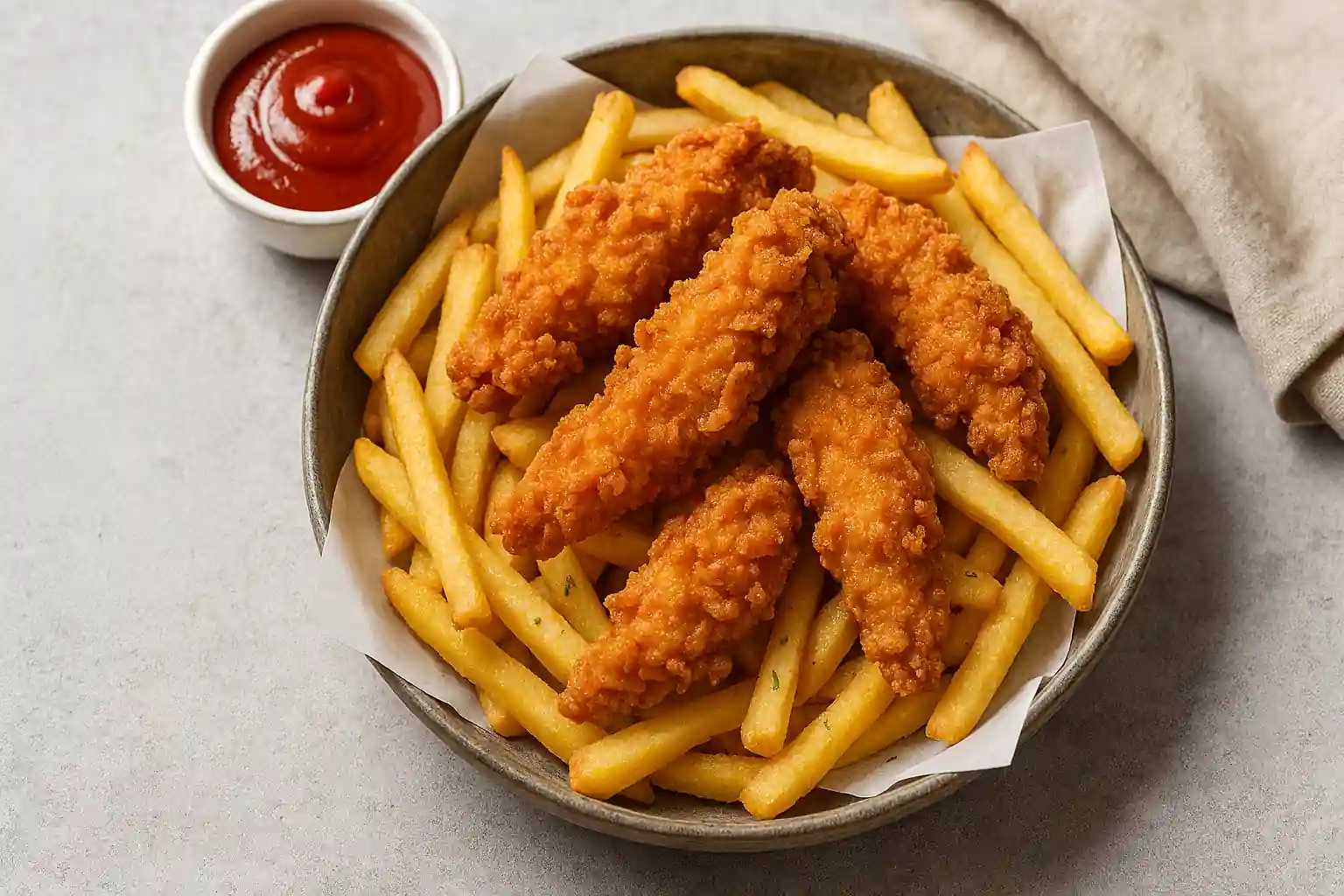 →
→Fried Chicken Fries Recipe
Fried chicken fries are the perfect crossover snack crispy on the outside and juicy on the inside, shaped like fries but made from seasoned chicken. This fried chicken fries recipe walks you through everything: what chicken fries are, how to make golden, crunchy chicken fries, and how to recreate fast food–style chicken fries at home … Read more
· 5 min read
Juicing Recipes: The Complete Informational Guide to Fresh, Healthy, Homemade Juice
Juicing recipes have become one of the most popular ways to consume fresh produce in a simple, drinkable form. From fresh juice packed with natural vitamins and minerals to carefully planned juice cleanse routines, juicing offers a convenient gateway into plant-based nutrition and liquid nutrition. This guide is designed to walk you through everything you … Read more
· 5 min read